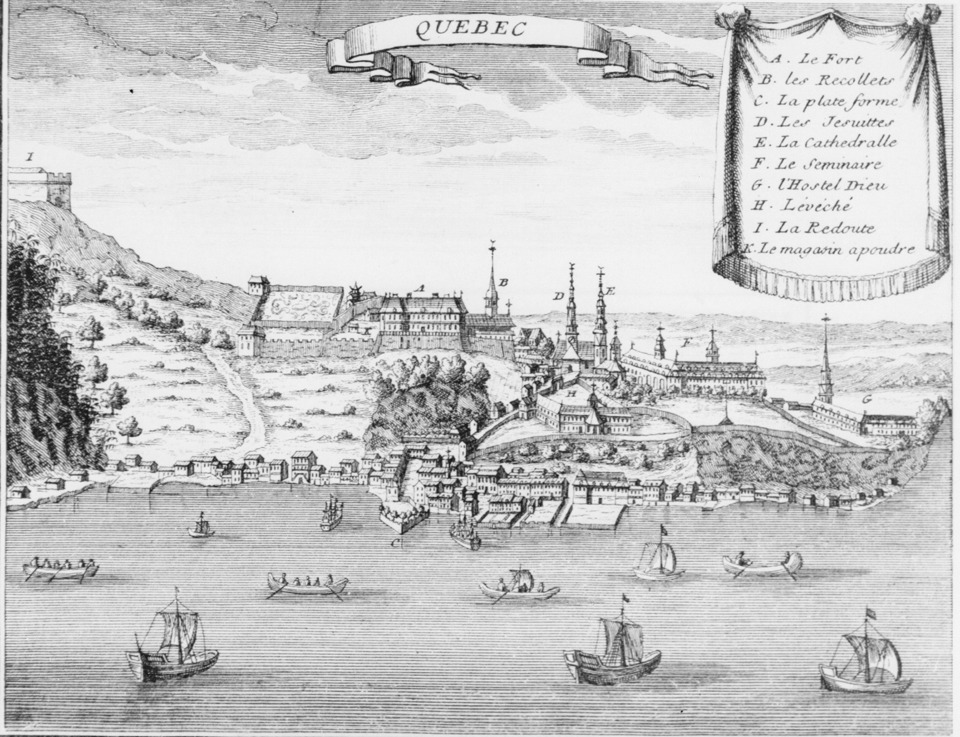
The first colonial developments (1608–1682)
In 1608, Samuel de Champlain dropped anchor at the Point of Quebec, which had been known to Europeans since the time of Jacques Cartier (1534). Champlain intended to set up a trading post there. This marked the true beginnings of the city of Quebec, with the settlement of the first colonists and the construction of a few buildings.
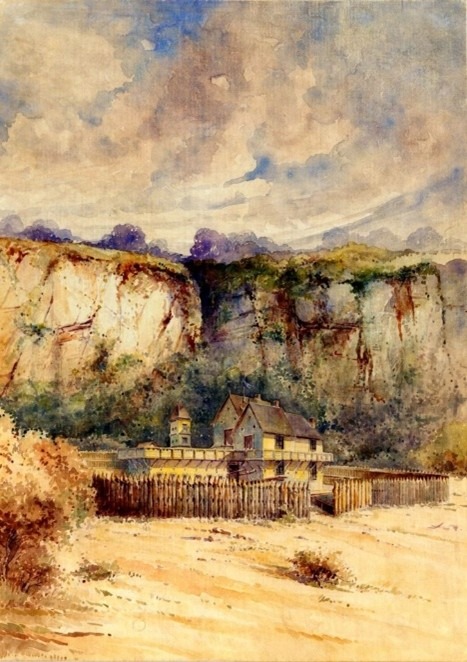
It was a slow and difficult start for the French. The winters took their toll, and the settlement was more of a small village than a town. Despite the addition of new defensive structures, Quebec City was captured just a few years later by two English privateers, the Kirke brothers, who held it between 1629 and 1632. When they left, they set fire to the main buildings of the budding colony.
From 1650 onwards, Quebec City experienced more rapid urban development. The arrival of the Filles du Roy (“King’s Daughters”) stimulated population growth, and the urban space came to be occupied by several service buildings in addition to Champlain’s Habitation. By 1681, Quebec City had a population of 1,282.