The Conquest (1759)
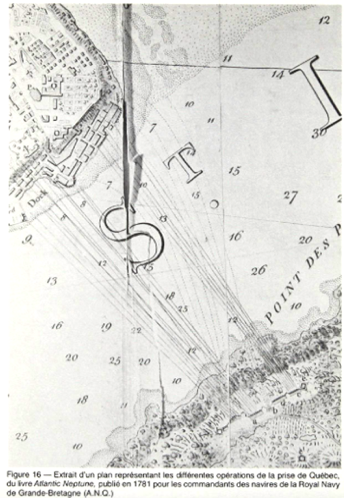
A major conflict soon brought a halt to the growth of Place-Royale. The Seven Years’ War was declared in 1756, with France and England vying for control of their colonies across the globe. As British troops tried to capture the city, 40,000 cannonballs and 10,000 incendiary bombs were fired on Quebec between July 12 and September 13, 1759. Place-Royale was at the heart of this conflict, as it was the site of some of the city’s key defensive structures. It was also a strategic location within the capital of New France, which served as the seat of the colonial government. The Conquest of Quebec was highly symbolic, due to the city’s cultural and political significance.
Following the English victory, Place Royale laid in ruins. Only a handful of buildings were spared. As it was a key economic hub, however, Place-Royale and the surrounding areas were rebuilt shortly thereafter.