

Defending a coveted location
Located where the land met the St. Lawrence River, Place-Royale quickly became a trading hub connecting Canada to France, but it also attracted the greed of other rapidly expanding colonial powers, as the British Empire was seeking to expand its grasp over North America at the same time as the French.
The construction of defensive structures to protect the city from invaders quickly became imperative. In order to protect the somewhat vulnerable first line of fortifications, a stone wall equipped with cannons, known as the Batterie Royale (Royal Battery), was constructed in 1691.
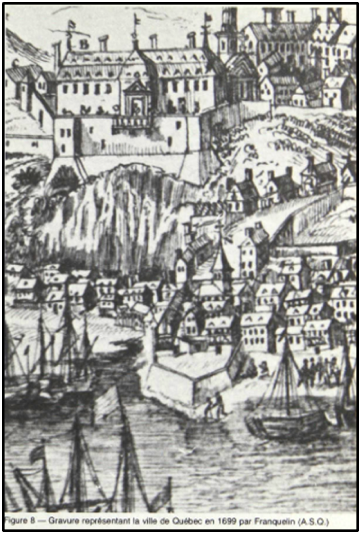
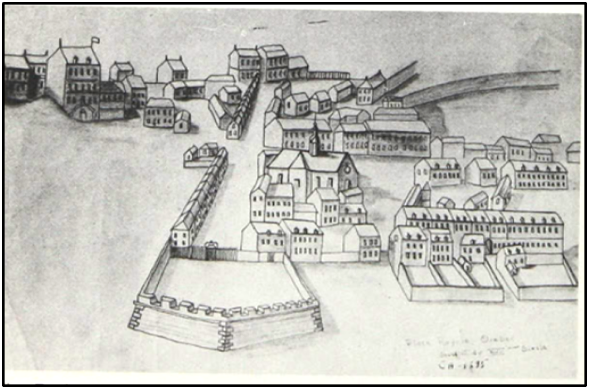
France’s fears were realized when the British tried to capture Quebec City in 1759. At that point in time, the Batterie Royale was the city’s main defensive structure. James Wolfe’s troops targeted the Batterie directly, causing significant damage. Place-Royale was bombarded with cannonballs filled with black powder, known as “pots au feu,” which set fire to numerous buildings. After the Conquest, the remains of the Batterie Royale were renamed the “Batterie de la Demi-Lune” (“Half-Moon Battery”) by British troops.
